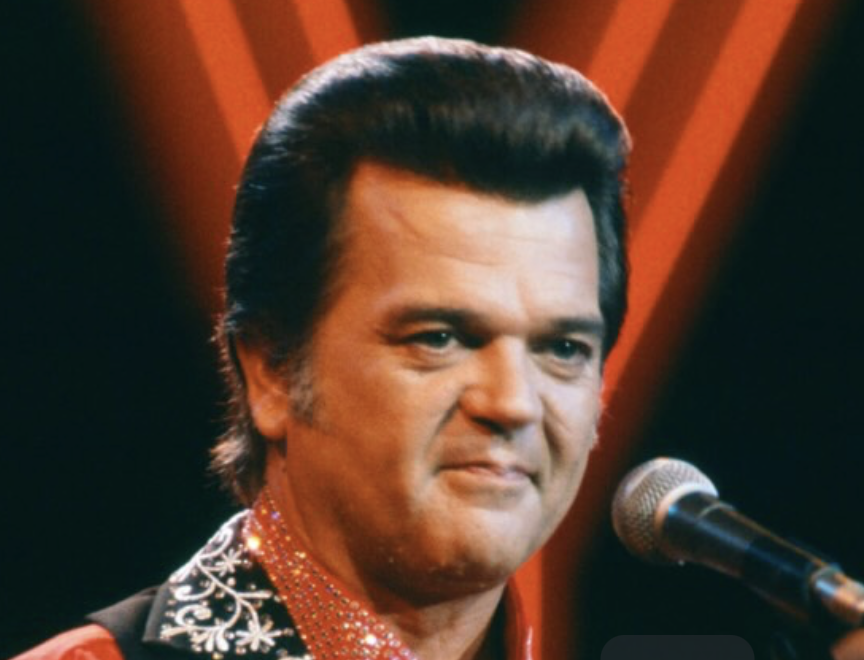
There's something magical about the moment when Nashville reaches beyond itself—when a song written in a Music Row studio travels farther than anyone imagined. That's exactly what happened with Conway Twitty's "Hello, Darlin'."
By the 1960s and '70s, Twitty had become one of Nashville's brightest luminaries, a country legend who could sell out any venue and make any crowd feel like he was singing directly to them. That was his gift—the ability to connect, to reach across any distance with his voice.
In 1975, during the height of the Space Age, American astronaut Thomas Stafford approached his fellow Oklahoman with an extraordinary request: Would Conway record "Hello, Darlin'" in Russian? It seemed impossible at first. Stafford wanted to play it as a gesture of peace during the Apollo-Soyuz Test Project—humanity's first joint space mission with the Soviet Union.
So Conway did what he'd always done. He said yes. He worked with a professor from the University of Oklahoma to learn enough Russian to phonetically capture the song. On July 17, 1975, American astronauts played "Privet Radost"—as the Russians knew it—across the void to cosmonauts aboard Soyuz 19.
Conway watched in a Los Angeles hotel room as his voice traveled through space. As he later said, it was something that had never happened before. A Nashville song, sung in Russian, reaching for the stars.
That's the power of music. It knows no borders, no distance, no divide.