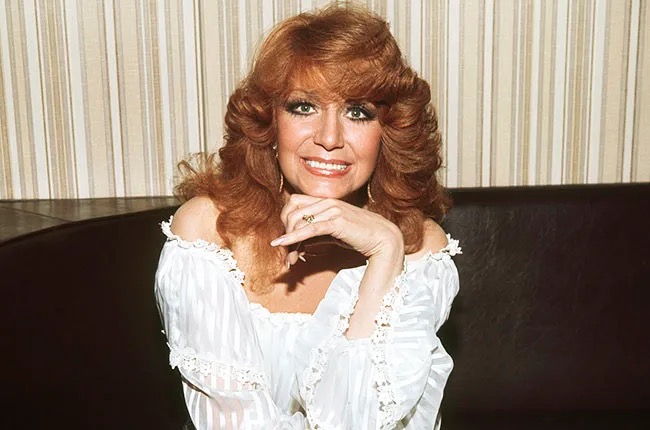
She grew up in a place called Frog Pond. That's not a metaphor. Dorothy Marie Marsh was born October 11, 1932, just outside McMinnville, Tennessee, the oldest of ten children in a family so poor that hardship wasn't a season — it was the weather. Her father abused her and ended up in prison. Her mother opened a small café to keep the family alive. Dottie picked up a guitar and never put it down.
She worked her way through Tennessee Tech, married a steel guitarist named Bill West, and eventually the two of them pointed their lives toward Nashville. By 1961 they'd arrived — and Dottie was ready.
The Nashville that welcomed her was electric. Willie Nelson was around. Roger Miller. Hank Cochran. Patsy Cline, who took Dottie under her wing and became her mentor and her friend. These were the people Dottie West was writing songs and swapping stories with while the rest of the world was still figuring out who she was.
Chet Atkins figured it out first. He signed her to RCA and produced her self-penned "Here Comes My Baby" — a Top Ten country hit that earned her a Grand Ole Opry membership and a Grammy. Not just any Grammy. The first Grammy ever awarded to a female country artist. She was also writing jingles for Coca-Cola, including the "Country Sunshine" campaign that became one of the most beloved commercials of the 1970s. Dottie West was everywhere.
Then came Kenny Rogers. In 1978, the two happened to share studio time at Sound Emporium right here on Music Row. They started singing together almost by accident. What came out of that room were number one hits — "Every Time Two Fools Collide," "All I Ever Need Is You." Rogers would later say of her: "A lot of people sing words. Dottie West sang emotions."
But Nashville giveth and Nashville taketh away.
By 1990, the money was gone. All of it — and then some. Dottie filed for bankruptcy listing more than a million dollars in debt. The IRS came calling with a bill for $2.4 million. During Country Music Fan Fair in the summer of 1991, her belongings — her furniture, her awards, the rights to 400 songs she had written — were auctioned off to satisfy her creditors. Dottie showed up anyway. Signed autographs. Bid on a few of her own things. That's who she was.
She was planning a comeback. She was always planning a comeback.
On the night of August 30, 1991, Dottie was running late for her performance at the Grand Ole Opry. The car Kenny Rogers had given her during her hardest days stalled out. She called her neighbor — an 81-year-old man named George Thackton — and he came to help. He drove fast to get her there on time. Too fast. His car hit an exit ramp and crashed.
Dottie didn't look badly hurt at first. But she had a ruptured spleen and a lacerated liver, and over the next five days her body fought a battle it couldn't win. She died on September 4, 1991, during her third surgery, after receiving 30 units of blood.
She was 58 years old. She was on her way to the Opry.
In 2018, the Country Music Hall of Fame inducted Dottie West — finally, and long overdue. Her voice is on recordings made just a few blocks from where you're standing right now. Next time you walk past Sound Emporium, think about what happened inside that room in 1978, when two musicians started singing together just to see what would happen.
Sometimes that's all it takes.